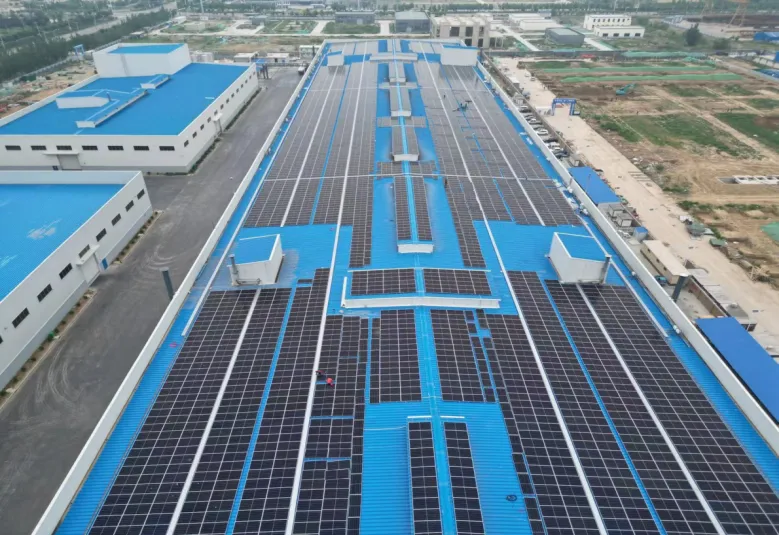
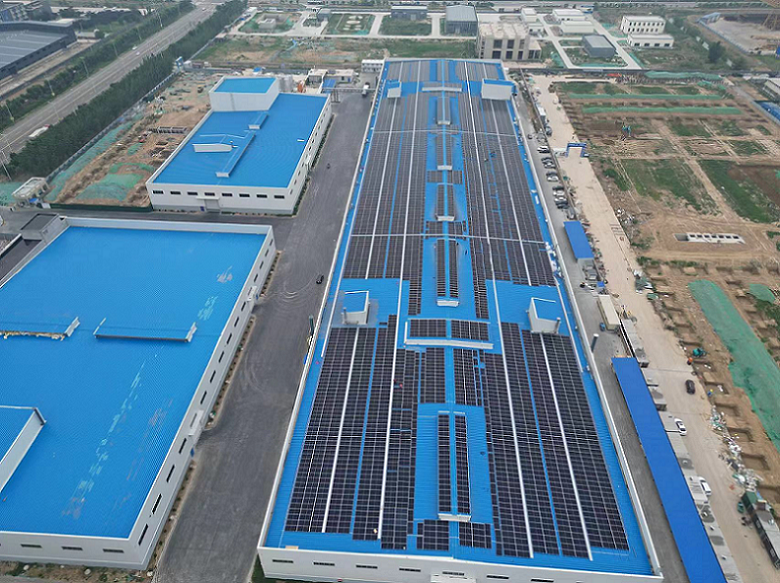
LONGi China Shandong Shilebu Agricultural 3.16MW Commercial PV Project

Cases image
Cases image

Project Overview

  • Project Type
    Industrial and commercial projects
    Project Location
    China | Shandong
  • Application Scenarios
    Rooftop
    Project Capacity
    3.16 MW
  • Product Type
    Hi-MO X10
    Partner
    Shandong Shilebu Agricultural Technology Co., Ltd.
Technical Highlights
1. Hi-MO X10 utilizes HPBC 2.0 cells, with a maximum conversion efficiency of 24.8%, breaking the world record for module mass production efficiency. Compared to TOPCon modules of similar size, Hi-MO X10 delivers 30 W higher power and generates 22 kWh more electricity per square meter per year; 2. Beyond tangible benefits, safety is the top priority for the owner. Hi-MO X10’s unique pseudo-bypass diode design plays a critical role: in cases of shading, obstructed currents can bypass the affected areas autonomously, reducing shading losses by 70% compared to TOPCon modules; 3. Additionally, the module significantly lowers the hot spot temperature under shading conditions, effectively mitigates fire hazards and ensures stable operation for both the modules and the roof.

Project Highlights

Amid the waves of energy transformation and industrial upgrading, a collision between a fertilizer giant and solar photovoltaic technology is igniting a green production revolution. Shandong Shilebu Agricultural Technology Co., Ltd., by installing Hi-MO X10 solar power stations, achieves dual breakthroughs in productivity and environmental protection.

The completion of this solar power plant leverages the factory’s large idle spaces to build a scalable solar power station, forming an efficient self-consumption and surplus grid-feeding model. With an annual generation of 4.1 million kWh and a peak daily generation of up to 21,000 kWh, it significantly reduces the company’s electricity costs while cutting significant amounts of carbon emissions. Annually, the project saves 1,232 tons of standard coal, reducing CO₂ emissions by 3,378 tons—equivalent to planting nearly 100,000 trees annually.