


Environmental
1、2024 Data on Return on Environmental Investments

2、2024 Data on Waste Disposal and Hazardous Waste
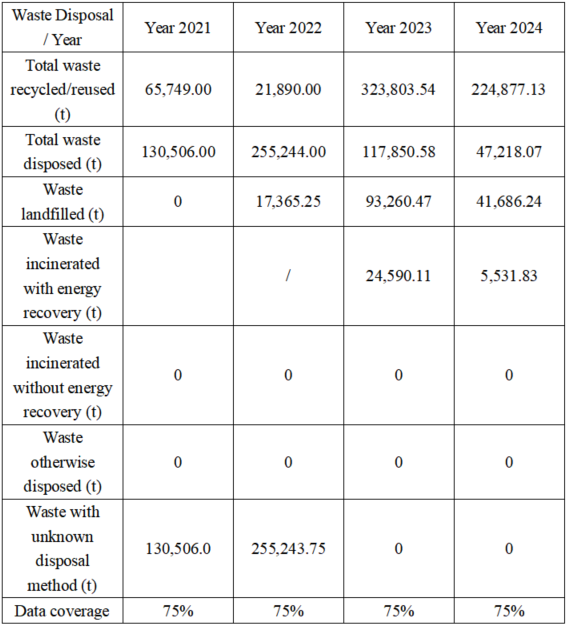
* In 2024, we plan to control the total amount of waste disposed of below 48,000 tons.
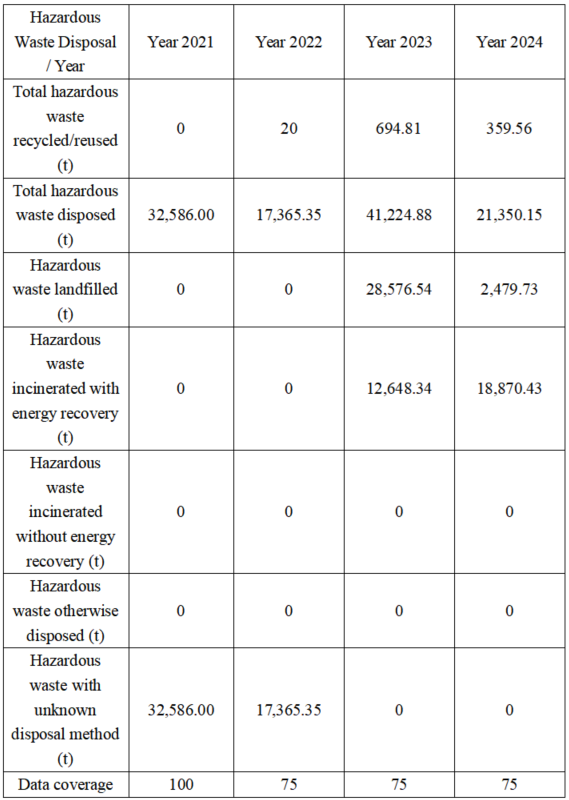
* In 2024, we plan to control the total amount of hazardous waste disposed of below 22,000 tons.
3、2024 Data on Volatile Organic Compounds Emissions

* In 2024, we plan to control the Direct VOC emissions below 140 tons.
4、2024 Data on Water-related Consumption

* In 2024, we plan to control the total net fresh water consumption within 9 million cubic meters.
Ultra-pure water usage
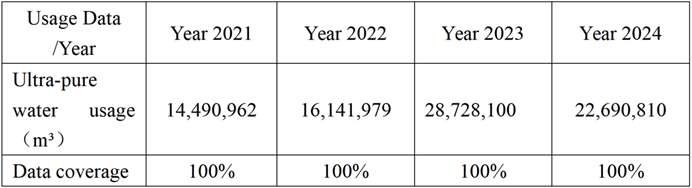
* In 2024, we plan to control the data of ultrapure water usage within 23,000,000 cubic meters.
5、2024 Data on Energy Consumption

* In 2024, we plan to control the total consumption of non-renewable energy below 5,500,000 MWh.
6、2024 Data on Greenhouse Gas Emissions

2024 Data on Indirect GHG Emissions (Scope 3 by Category)
l Purchased Goods and Services: 22,961,775.56 (tCO2e)
(1) Calculation formula: GHG Emission= Raw material consumption × Emission factor × GWP value;
(2) Raw material consumption: The activity data comes from the LONGi procurement system. There are a wide variety of purchased raw materials, and the storage units of most raw materials are not in terms of mass. Therefore, for most raw materials, unit conversion is involved, and the conversion coefficients are mainly derived based on empirical values.;
(3) Emission factor: Adopt the emission factors provided by databases such as "Ecoinvent" and "China Product Life Cycle Greenhouse Gas Emission Coefficient Database";
(4) GWP Value: Sourced from the Sixth Assessment Report (AR6) by Working Group I (WG1) of the Intergovernmental Panel on Climate Change (IPCC) published in 2021.
l Capital Goods: 1,142,470.78 (tCO2e)
(1) Calculation formula: GHG Emission= Purchase amount of various newly acquired capital goods × Emission factor × GWP value
(2) The activity data we use is the purchase amount of various newly acquired capital goods, which is consistent with that in the annual report.
(3) The emission factors are sourced from Ecoinvent.
(4) GWP Value: Sourced from the Sixth Assessment Report (AR6) by Working Group I (WG1) of the Intergovernmental Panel on Climate Change (IPCC) published in 2021.
l Fuel-and-energy-related-activities (not included in Scope 1 or 2): 284,040.45 (tCO2e)
(1) We have tallied the upstream emissions from natural gas, gasoline, diesel, natural gas, steam, and electricity, corresponding to Category 6 in our verification certificate: Other emission sources.
(2) Calculation formula: GHG Emission = Consumed fuel × Upstream emission factor × GWP value;
(3) Consumed fuel: Refers to the total energy consumption throughout 2023. The data comes from invoices, bills, internal statistical ledgers, etc.;
(4) Upstream emission factor: Adopt the emission factors provided by databases such as "Ecoinvent" and "ghg-conversion-factors-2024-full-file-update";
(5) GWP sourced from the Sixth Assessment Report (AR6) by Working Group I (WG1) of the Intergovernmental Panel on Climate Change (IPCC) published in 2021.
l Upstream transportation and distribution: 633,061.46 (tCO2e)
(1) This category covers the inbound and outbound logistics paid by LONGi, including road transportation, railway transportation, express delivery, air transportation, and sea transportation.
(2) Calculation formula: GHG emission= Transport weight × Transport distance × Emission factor × GWP;
(3) The activity data mainly comes from the LONGi procurement system. Due to the wide variety of purchased raw materials, and the storage units of most raw materials are not in terms of mass. Therefore, for most raw materials, unit conversion is involved, and the conversion coefficients are mainly derived based on the empirical average value.
(4) Transport distance: The activity data is obtained based on data queries such as "Bus/Train Timetable" and "SeaRates Database"
(5) Emission factor from "China Product Life Cycle Greenhouse Gas Emission database", etc.
(6) GWP Value: Sourced from the Sixth Assessment Report (AR6) by Working Group I (WG1) of the Intergovernmental Panel on Climate Change (IPCC) published in 2021.
l Waste generated in operations: 1,256.52 (tCO2e)
(1) Calculation formula: Greenhouse gas emissions CO2e = Waste generated from operations × Emission factor corresponding to the processing method × GWP value
(2) The activity data comes from waste management ledgers, processing contracts, etc.
(3) Emission factor: "Ecoinvent" database and "UK-ghg-conversion-factors-2024".
(4) GWP Value: Sourced from the Sixth Assessment Report (AR6) by Working Group I (WG1) of the Intergovernmental Panel on Climate Change (IPCC) published in 2021.
l Business travel: 18,649.5 (tCO2e)
(1) Calculation formula: GHG Emission = Travel distance × Emission factor × GWP value
(2) Travel distance: The activity data is calculated based on the travel expenses and the fare per unit distance. The main data comes from the first-hand data provided by the Ctrip Business Travel system, and the other part is calculated based on the business travel distance.
(3) Emission factor:"China Product Life Cycle Greenhouse Gas Emission database"
(4) GWP Value: Sourced from the Sixth Assessment Report (AR6) by Working Group I (WG1) of the Intergovernmental Panel on Climate Change (IPCC) published in 2021.
l Employee commuting: 6,986.47(tCO2e)
(1) Calculation formula: Greenhouse gas emissions CO2e = Daily commuting distance × Working days × Commuting emission factor × GWP value
(2) Daily commuting distance: The activity data mainly comes from internal questionnaires and the running distance of the shuttle bus. Working days: The activity data comes from the company's questionnaires and internal statistical reports.
(3) Emission factor: "China Product Life Cycle Greenhouse Gas Emission Coefficient Database", Ecoinvent 3.9.1, etc.
(4) GWP Value: Sourced from the Sixth Assessment Report (AR6) by Working Group I (WG1) of the Intergovernmental Panel on Climate Change (IPCC) published in 2021.
l Upstream leased assets: 30,013.61 (tCO2e)
(1) In 2024, our company leased a cafeteria, dormitories, vehicles, and partial office spaces.
(2) Calculation Formula: Greenhouse gas emissions (CO2e) = Energy consumption of leased premises × Emission factor × GWP value
(3) Energy consumption of leased premises: Activity data includes energy sources such as electricity, natural gas, and heating, sourced from internal statistical reports, invoices, contracts, etc.
(4) Emission factor: Derived from databases such as "Ecoinvent" and the "Chinese Life Cycle Greenhouse Gas Emission Coefficients Database for Products."
(5) GWP Value: Sourced from the Sixth Assessment Report (AR6) by Working Group I (WG1) of the Intergovernmental Panel on Climate Change (IPCC) published in 2021.
l Downstream transportation and distribution: 29,618.16 (tCO2e)
(1) Calculation Formula: GHG Emissions = Transport Weight × Transport Distance × Freight Transport Emission Factor × GWP
(2) Transport Weight: Activity data is primarily sourced from LONGi's procurement and sales systems, as well as map-based inquiries; Transport Distance: Activity data is derived from sources such as "Vehicle Schedules" and the "SeaRates Database."
(3) Freight Transport Emission Factor: Emission factors are obtained from databases such as "Ecoinvent" and the "Chinese Life Cycle Greenhouse Gas Emission Coefficients Database for Products."
(4) GWP Value: Sourced from the Sixth Assessment Report (AR6) by Working Group I (WG1) of the Intergovernmental Panel on Climate Change (IPCC) published in 2021.
l Processing of sold products: 1,380,930.15 (tCO2e)
(1) The silicon wafers produced by our company are processed into solar cells and modules after shipment.
(2) Calculation Formula: GHG Emissions = Total Weight of Products Sold Annually × Electricity Consumption per Unit Weight during Processing × Grid Emission Factor × GWP
(3) Total Weight of Products Sold Annually: Data sourced from the company's order system.
(4) Emission Factor: Average grid emission factor of the national power grid.
(5) GWP Value: Sourced from the Sixth Assessment Report (AR6) by Working Group I (WG1) of the Intergovernmental Panel on Climate Change (IPCC) published in 2021.
l Use of sold products: 0 (tCO2e)
The silicon wafers and photovoltaic modules sold by our company do not consume any fuel or energy during their use by end-users (enterprises or consumers). Therefore, we consider Category 11 not applicable to LONGi.
l End of life treatment of sold products: 54,152.66 (tCO2e)
(1) The silicon wafers and photovoltaic modules sold by our company typically have a lifespan of 20 - 25 years. Here, we have estimated the carbon emissions expected during the end-of-life treatment phase of products sold in 2024, after 20–25 years of use.
(2) GHG Emission = Weight of Sold Products × Emission Factor × GWP Value
(3) Weight of Sold Products: Activity data sourced from waste management logs and treatment contracts.
(4) Emission Factor: The emission factor provided by the "Ecoinvent" database is used.
(5) GWP sourced from the Sixth Assessment Report (AR6) by Working Group I (WG1) of the IPCC published in 2021.
l Downstream leased assets: 0 (tCO2e)
Our company has not leased its assets to other companies in 2024. Therefore, we believe that Category 13 is not relevant to our company.
l Franchises: 0 (tCO2e)
Irrelevant as LONGi does not have activities associated with this category.
l Investments: 800,970.78 (tCO2e)
In 2024, LONGi made investments in some joint venture companies. The activity data is the total investment amount of our company's joint ventures. It is calculated by referring to the emission factor from Gabi.
l Other upstream: 0 (tCO2e)
No other upstream emission.
l Other downstream: 0 (tCO2e)
No other downstream emission.
7、The Status of Perfluorocarbon Emissions in 2024
LONGi's production process does not involve the use and emission of perfluoro compounds (PFCs).
8、Sustainable Sustainable Water Management in Communities
LONGi commits to providing safely managed water, sanitation, and hygiene facilities (WASH) in the workplace, ensuring a safe drinking water supply and personal hygiene conditions. LONGi is committed to improving the water sourcing and usage environment in its operation sites. All operation sites of LONGi should discharge treated wastewater that strictly meet standards in accordance with local regulations.
LONGi remains committed to the sustainable management of water resources in the communities where its factories are located. Regular water risk assessments are conducted for all its self-operated facilities. In addition, it promotes water conservation awareness campaigns in all factories and implements related initiatives such as rainwater collection and reclaimed water reuse to support local water resource protection.
9、Sustainable Water Management in Value Chain
Longi attaches great importance to water resource management across its value chain and is committed to collaborating with suppliers to promote water conservation practices. Through comprehensive review and in-depth analysis of production processes among various types of suppliers, we identify water-saving opportunities and actively encourage the implementation of water conservation management and technologies. Longi supports suppliers in conducting water risk assessments to identify and evaluate the water stresses they face and to develop corresponding response strategies.
We work with core suppliers to establish water use intensity targets and regularly monitor and evaluate their progress. Longi has currently set the following water stewardship targets across the value chain:
l Core silicon material suppliers aim to reduce water intensity per unit of silicon produced by 10% by 2030, using 2022 as the baseline;
l Longi promotes the establishment of quantitative water use targets among key raw and auxiliary material suppliers and works collaboratively with them to track performance.
Furthermore, we continuously collect information and performance data on water conservation projects from our suppliers to facilitate the sharing of best practices and enhance overall water use efficiency throughout the value chain.
10、Verification and Management of Product Water Footprint
Longi places high importance on water resource management throughout the product life cycle and continuously advances water footprint measurement and verification. In 2024, Longi has successfully completed the water footprint assessment for its core product — the Hi-MO 9 module, which passed independent third-party verification and obtained a professional water footprint verification statement.
Building on this achievement, the company is developing an internal water footprint calculation model based on the Hi-MO 9 module, systematically analyzing water consumption across various stages from raw materials to manufacturing. This initiative aims to improve product water footprint management records and accurately identify and implement water-saving opportunities throughout the entire life cycle.
Looking ahead, Longi plans to extend the water footprint management experience gained from the Hi-MO 9 module to more core products and production bases, continually enhancing water use efficiency and achieving transparent, standardized, and refined water resource management.
11、Climate-related scenario analysis
Each climate-related risks and opportunities (CRO) prioritized in our risk assessment process was assigned a specific parameter that could serve as an indicator of how external factors could change under various climate scenarios leading to the materialisation of the CRO. Under Net Zero 2050 scenario, which set out a rapid decarbonisation pathway in line with the Paris Agreement’s goal of limiting peak warming to below 2°C compared to pre industrial times, there is increasing electrification demand in multiple sectors, especially from renewable energy and low carbon sources. This can be regarded as an opportunity for LONGi and generates revenue for our business growth. As we identified that the demand for green electricity is soaring, as a global solar technology company, LONGi provides innovative green new energy solutions for customers in the industrial, commercial, and household markets to realise the benign interaction between ecology and energy. LONGi keeps expanding the application scenarios of PV in industrial enterprises and drives the power industry to achieve carbon neutrality by building eco-friendly PV Power Plants, Solar-plus-Energy Storage Plants and Hybrid Power Plants.
Based on the scenario analysis, we found that under the net zero 2050 scenario, the carbon price would increase to varying degrees by 2030 and by 2050 respectively comparing with the level of 2020. The emission trading scheme and other implicit or explicit carbon pricing mechanisms may increase the compliance cost and the embedded carbon pricing in power and upstream suppliers may also drive up the operational cost. The likelihood of this risk is medium, and the velocity of the impact is fast. Having identified this risk, LONGi continues to optimise the Group’s energy management system and has established policies such as the Energy Management Manual. We also set up a special budget for energy management and encouraged Group-wise involvement in energy management. In 2024, the Company implemented 477 technical energy efficiency upgrades, projected to conserve approximately 426 GWh of electricity annually.
The results of scenario analysis provide decision-making information for the company's business processes, for example: RCP 8.5 and IEA NZE 2050 scenarios helped our company set more specific and measurable targets. In 2023, we were the first Chinese photovoltaic company to pass the Science-Based Targets initiative (SBTi), and we identified and managed climate risks in accordance with international standards. We set emission reduction targets that align with the trends of the photovoltaic industry and our own business conditions, with range one and two targets consistent with the "1.5°C target" proposed in the Paris Agreement. The specific targets are as follows: 1) by 2030, reduce range one and two emissions by 60% compared to 2020; 2) by 2030, reduce the emissions intensity of each ton of procured goods and services by 52% compared to 2020. In addition, LONGi also set electricity and water consumption targets, continuously promoting energy conservation throughout the group. To achieve these targets, we have developed a comprehensive climate action strategy, setting a series of climate-related targets and corresponding monitoring indicators to track and manage the progress of our climate action. For example, achieving 70% renewable power usage by 2027 and 100% renewable power usage by 2028.
12、Net-zero emission commitment
LONGi Green Energy Co.,Ltd. commits to reach net-zero greenhouse gas emissions across the value chain by 2050. And we have committed to seek validation of net-zero target by the Science Based Targets initiative in the next two years.
13、Detailed Measures for Climate Incentives
Position entitled to monetary incentive:Board or executive level
LONGi has set Awards for Energy Improvement Projects, which is part of the special budgets for energy management work. We review all energy improvement projects submitted by Business Units each year, select Group level projects, with the total amount below 500,000 Yuan. Business units are entitled to a bonus of set figure from 1,000 yuan to 20,000 yuan according to different awarding standards for their energy improvement projects. Details of the mechanism: 1. The measurement period for performance: both short-term and long-term. It can be applied for short-term projects or annual energy savings targets achieved. 2. Incentive measures and the quantitative details of performance indicators: Energy-saving projects were adopted and implemented, and the energy savings and benefits were evaluated for the energy-saving projects. Only completed projects could be submitted for review, and they were awarded first, second, third prizes and excellent awards. The project team and its members could receive cash prizes, ranging from 1000 to 20,000 yuan, based on their contribution to the energy-saving effects. 3. Regional, departmental, and/or business background: energy-saving measures can be proposed by departments of all companies, without restrictions on region, department, or business background.
14、Biodiversity Risk Assessment
LONGi emphasizes biodiversity protection during production, operations, and project development. We require that all construction projects undergo ecological and biodiversity impact identification and assessments during the design phase, and apply the avoidance principle during the construction phase to minimize impact on ecologically sensitive and vulnerable areas. We advocate biodiversity conservation among upstream and downstream partners, and provide funding and support for biodiversity conservation actions. Biodiversity conservation is one of the sustainability issues in our ESG development, included in our ESG topics in our annual board level meetings.
15、Waste Management-related Projects
LONGi has formulated and implemented a comprehensive waste management strategy, with a focus on source reduction and resource utilization. The key initiatives include:
(1) Investment in special R&D funds for waste reduction: The company continuously allocates special R&D funds to develop and optimize green production processes, material recycling technologies, and waste circular utilization solutions, reducing waste generation from the source and improving resource use efficiency.
(2) Promotion of zero waste to landfill and systematic certification: The company has systematically carried out practices to divert waste from landfills, and relevant achievements have been certified by independent third-party organizations. Meanwhile, the company explicitly sets zero landfill certification requirements at the supplier admission stage to ensure supply chain partners collaboratively implement waste resource management. This practice fully responds to the company's waste management plan requirements for high-standard and traceable environmental management, spanning the entire process of internal operations and supplier management.
(3) For suppliers involved in the treatment of waste electrical and electronic equipment, LONGi Green Energy requires them to strictly follow the detailed e-waste management standards, establish a full-process control system covering collection, classification, and disposal, and ensure that e-waste is treated in compliance with regulations to minimize environmental impacts.
Social
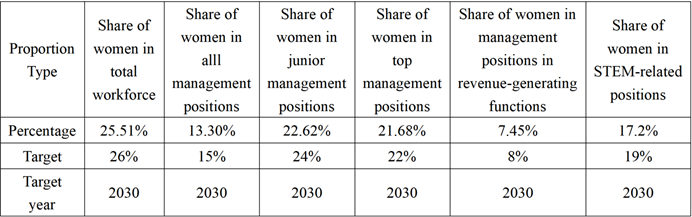
1、Workforce Breakdown: 2024 Data on Gender
2、Workforce Breakdown: 2024 Data on Race/ Ethnicity & Nationality

3、2024 Data on Gender Pay Indicators

4、2024 Data on Training

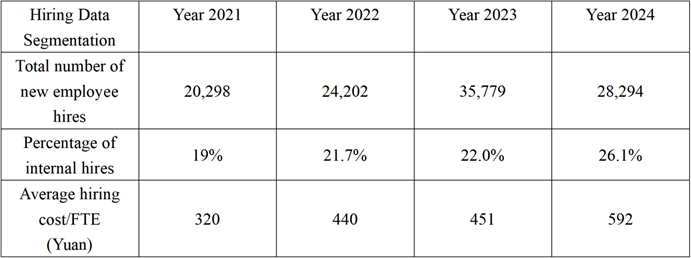
5、2024 Data on Hiring
6、2024 Data on Trend of Employee Wellbeing
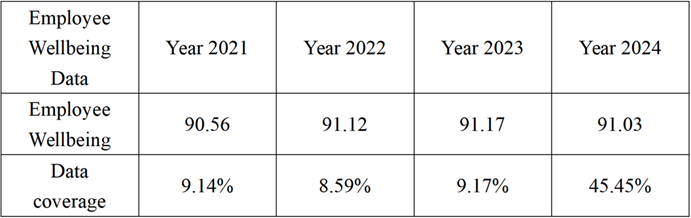
* In 2024, our goal is to maintain the employee satisfaction result at a level of 91 points or above.
7、Types of Performance Evaluation
To promote comprehensive employee development and strengthen team collaboration, the company has established a systematic and multi-dimensional performance evaluation system, aiming to comprehensively and fairly measure employee performance and support the common growth of the organization and individuals. During this year, the company has fully implemented a 360° feedback evaluation mechanism, which comprehensively assesses employees' work performance, core competencies, and behavioral performance by integrating feedback from multiple parties, including the employees themselves, superiors, peers, subordinates, and internal/external customers. In addition, we attach importance to team collaboration and overall contributions, and implement a team-based comprehensive performance evaluation system. Based on the achievement of shared team goals, this evaluation focuses on team collaboration efficiency, knowledge sharing, collaborative innovation, and the quality of collective outcomes, strengthens team cohesion, encourages a collaborative culture, and ensures that team performance is closely aligned with organizational strategies.
8、Employee Development Programs
LONGi has always regarded employees as the core driving force for the company's sustainable development. We are committed to empowering employee growth through systematic and forward-looking development programs, accelerating the mutual commitment between the organization and talent. The company provides employees with diverse development programs, including digital transformation projects. In active response to the global trend of digital transformation, the company has specially established a series of digital capability enhancement programs covering key areas such as intelligent manufacturing, big data analysis, Internet of Things (IoT) applications, artificial intelligence (AI), and industrial internet. Through these programs, we help employees master cutting-edge digital skills, enhance technical application and innovative problem-solving abilities, and support the company's continuous leadership in the field of green energy technology.
9、Employee Support Programs
LONGi has always been committed to fostering a warm and inclusive work atmosphere, with a practical focus on balancing employees' work and life. To comprehensively support the well-being of employees' families, we have formulated and implemented a number of family welfare support programs, with key attention to caring for employees' children, including:
(1) Providing financial support such as children's education subsidies and parenting allowances, as well as one-time childbirth cash grants for new parents, effectively relieving the pressure of family upbringing;
(2) Organizing parent-child activities to enhance employees' family belonging and cohesion;
(3) For employees' children who need to study in different locations, LONGi provides special consultation services and supporting support programs for off-site enrollment.
Through substantive measures such as parenting allowances, LONGi actively responds to family welfare support programs, aiming to reduce employees' economic burden of child-rearing and practice the people-oriented management philosophy.
10、Labor Practices Programs
LONGi has always adhered to the people-oriented business philosophy, committing to providing every employee with fair, reasonable, and dignified compensation and working environment. When formulating compensation standards, the company systematically refers to local cost-of-living estimates and market benchmarks to ensure that employees' wages meet or exceed the level required for a decent life.
LONGi strictly complies with national labor laws and regulations regarding working hours and overtime compensation, ensuring that every employee receives full overtime pay in accordance with the law for work beyond statutory working hours, thus effectively safeguarding employees' legitimate labor benefits.
In addition, LONGi has established and implemented a mechanism for regular communication with worker representatives on working conditions. Through channels such as democratic dialogues and labor-management negotiation meetings, the company widely listens to employees' opinions and demands on labor environment, welfare benefits, safety management, etc., jointly promoting the continuous improvement of the working environment and humanized management.
11、Graduate traineeship/apprenticeship program
Comprehensive training plan, implementation details, and improvement results (with clear emphasis on key stages and projects)
1.0 Purpose and scope of application for LONGi "Graduate Traineeship" program
Purpose:
· Convey the development concepts, principles and goals of LONGi's graduate and internship training, and form a unified ideology and action guide.
· Clarifying the role, rights, and responsibilities of organizations at all levels based on LONGi's key graduate training and development activities fosters collaborative and efficient development of graduates' training.
· By formulating the general growth path and three-year training and development framework for LONGi's graduates, including training empowerment, on-the-job practice, business coaching and growth exposure, training evaluation, etc., we will guide business units to formulate and implement classified and hierarchical targeted training and development plans for graduates, form a set of systematic and standardized graduate training and development business processes, build an excellent talent team, and support the long-term sustainable development goals of the business.
Scope of Application:
· Applicable to the LONGi 2023-2026 LONGi Futures, as well as the LONGi Cultivation programs in 2024 (for the 2023 graduates)
· The complete "LONGi Graduate Recruitment Management Regulations" is scheduled to be released in 2024.
· Applicable to internal LONGi recruitment for recent graduates (graduating students), interns, apprentices, and management trainees, etc.

2.0 The development concept, principles, and purpose of LONGi "Graduate Traineeship" project
The concept of "training and developing":
· Self-development, cultivating development in practice.
· Combining training with practice, with practice as the main focus.
· Give opportunities, apply pressure, and maintain high goal orientation.
The principles of "training and developing"
· Based on the internal talent training mechanism, meeting the gap in cadres and talents.
· Develop a training and development plan based on qualifications for the position.
· Develop targeted training programs based on the classification and stratification of campus recruitment, and implement individualized training responsibilities.
The purpose of "training and developing"
· The first stage - LONGi Futures: After one year of basic training, graduates are qualified for P2 positions.
· The second phase - LONGi Cultivation: Graduates who have been employed for 2-3 years, after a 2-year accelerated training, will be qualified for P3 positions.
Note: The first year of doctoral will be enrolled in the LONGi Futures plan, and the second to third year will enrolled in the LONGi Cultivation plan, and finally qualified for the P4 position.
3.0 The process of business development in LONGi "Graduate Traineeship" project
Tailor growth paths by job qualifications, cultivate through practical experience, and clarify responsibility divisions between headquarters and business units for graduate development activities.

12、Formal talent pipeline development strategy
Required disclosure content: a comprehensive talent strategy and training plan, including predictive recruitment, job recruitment, job design, and recruitment work and overall operational mechanisms.
(1)Talent Pipeline development strategy

(2)Responsibility and Authority Description of Talent Development Mechanisms
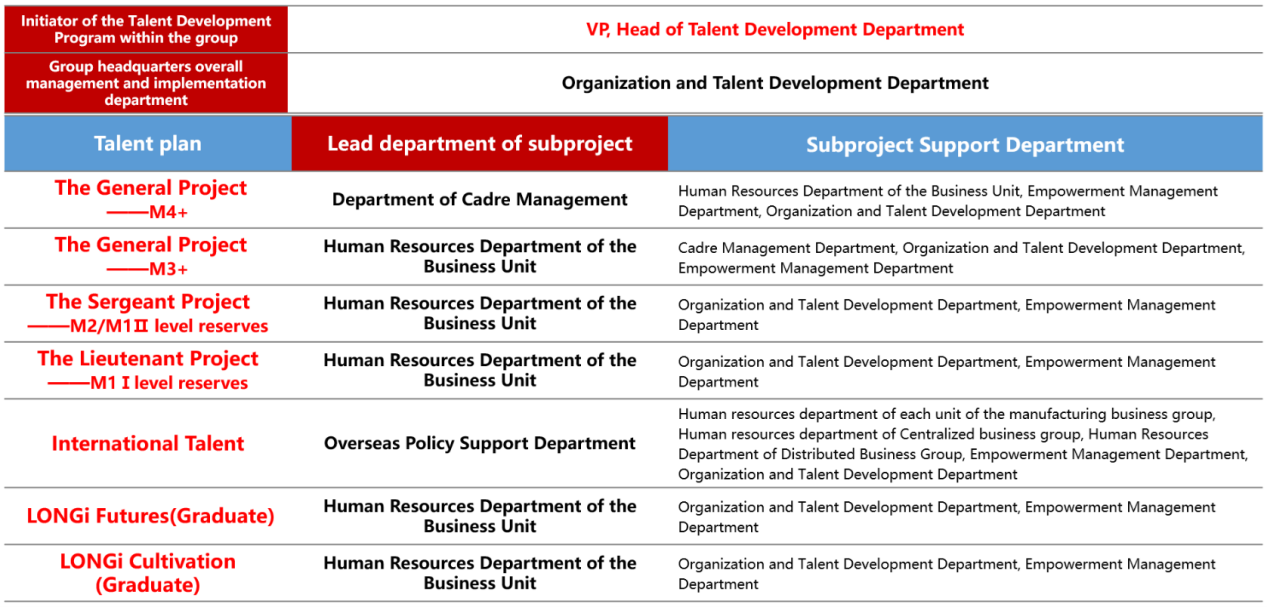
(3)Management of Talent Development Mechanisms: identification and selection
Before entering the talent development program, it is necessary for the owner of each talent development mechanism within the business unit to lead the assessment. Based on the unique business circumstances, the gap between the capabilities of the reserve talent and the target position, as well as their past training experiences, it will be determined whether they should participate in the standardized development program or be placed in a differentiated talent management arrangement (such as direct talent assessment and placement). This ensures that each reserve talent has a clear talent development plan.

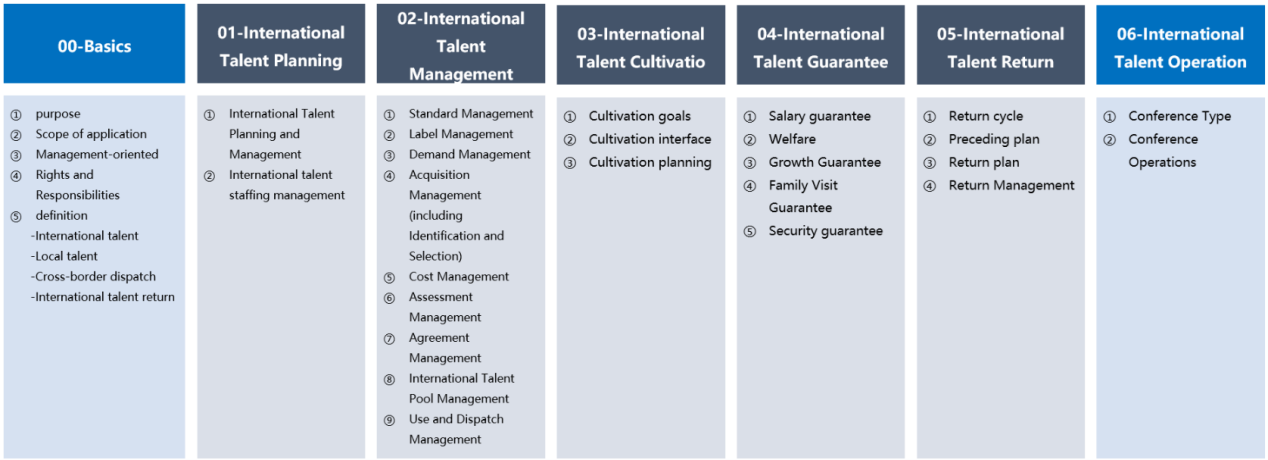
(4)International talents management Planning
13、Partners with educational institutions to develop or deliver joint training programs for staff
Comprehensive professional qualifications and position support plan & well-developed and clear training mechanism
(1)Supporting employees in attaining professional qualifications and degrees
LONGi attaches great importance to the continuous education and personal growth of employees, establishes and improves the talent training mechanism, focuses on the growth and development of employees, and provides institutional guarantees for all employees(including to obtain professional certification and degree in an all-round way. LONGi encourages all employees to participate in academic advancement programs in an effort to develop the Company into a multi-functional platform that integrates learning and work. LONGi conducts regular business needs surveys and training budget kick-off meetings every year to ensure that the training content is closely aligned with strategic planning, business needs and employee demands.This helps to drive the continuous improvement of the Company and individuals and achieve the dual development of the Company and individuals.
For example, support the organization of finance, procurement, investment, construction engineering and other key positions of employees to participate in a series of professional continuing education courses, including CA (Chartered Certified Accountant), CPA (Chartered Certified Accountant), accounting, ACCA (Association of Chartered Certified Accountants) and Constructor I.
Degree and Certification Programs
In 2024, LONGi provided education advancement subsidies of RMB 39,900 to 19 operational sequence employees, taking practical action to support employee growth.
In 2024, LONGi had 9 subsidiary companies successfully assist employees in obtaining professional skill level certifications, granting a total of 63,000 yuan in educational subsidies. Among the employees, 34 successfully upgraded their education and 613 obtained professional titles.
Cooperating with third-party institutions to develop training programs for employees in professional sequence/series; for example, working with HR Excellence Center and Huawei Union College to enhance professional capabilities of human resources workers. Buying management courses from Huawei, Dedao, Hundun and other institutions to offer opportunities for managers to learn and grow. In 2024, the expenditure on the utilization of LONGi's professional platform accounts surpassed 335,510 RMB.
Partners with educational institutions to develop or deliver joint training programs for staff
To alleviate the global talent gap in PV industry, LONGi, together with Carbon Neutrality College of Northwest University, explores the new model of college-enterprise collaboration by establishing the “LONGi Class” to jointly cultivate leading PV talents. In November 2024, 12 students graduated from the class and commenced their internship at LONGi Central R&D Institute. The program features the dual-mentorship system, joint development of courses, and hands-on training, providing students with comprehensive training opportunities covering professional theory and practice.
14、Internal Procurement Staff Training
In 2024, LONGi Green Energy actively promoted supply chain management and sustainable development by empowering suppliers and procurement personnel through a series of training courses. The training content included "Supplier CSR Audit Empowerment Coaching," "Building a Green and Compliant Supply Chain Together, Creating Long-term Sustainable Development," "LONGi Supplier CSR Special Empowerment Training," "Sustainable Development and Sustainable Procurement Trend Sharing," "Global Green Supply Chain Governance and Value Creation Practices," and "Challenges and Responses to Human Rights in the Context of Corporate Globalization." These trainings aim to enhance supply chain management capabilities, promote environment compliance, strengthen awareness of sustainable procurement, and address human rights challenges in globalization, laying a solid foundation for achieving long-term sustainable development. LONGi Green Energy will continue to promote sustainable development and responsible supply chain management through systematic training.


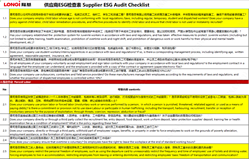
【Supply Chain】
16、Supplier Empowerment Plan
LONGi Green Energy has implemented a five-year supplier empowerment plan, adopting an advanced management plan that expands from the company's internal supply chain to the upstream supply chain, gradually enhancing the system construction and on-site capabilities of suppliers. LONGi Green Energy plans to achieve 100% supplier participation in capacity building by 2028.
In 2024, we continued to improve the supplier capability building system and publicly disclosed and implemented a systematic supplier development process, which included providing suppliers with ESG performance benchmarks for peer industry comparisons to help them identify gaps and position improvement directions.

17、Supplier Screening Methods
LONGi is committed to building a safe, reliable and responsible green supply chain system. In the process of screening key suppliers from tier-1 suppliers, the company has established multi-dimensional and systematic evaluation criteria, covering the following assessment contents:
Environmental & Social Aspects: ESG performance such as labor management and energy consumption is incorporated into the supplier "scorecard" for comprehensive supplier audit and selection.
Governance Aspects: Strictly evaluate the supplier's corporate governance structure, business ethics, compliance system and risk management capabilities.
Business Relevance Aspects: Comprehensively consider the supplier's performance in product criticality, supply stability, technical matching degree and strategic collaboration.
Specific Commodity Risks: For photovoltaic materials and key components, identify and assess ESG risks of specific commodity categories, including raw material traceability, environmental compliance, labor rights and interests, etc.

18、Supplier Performance Rating Display
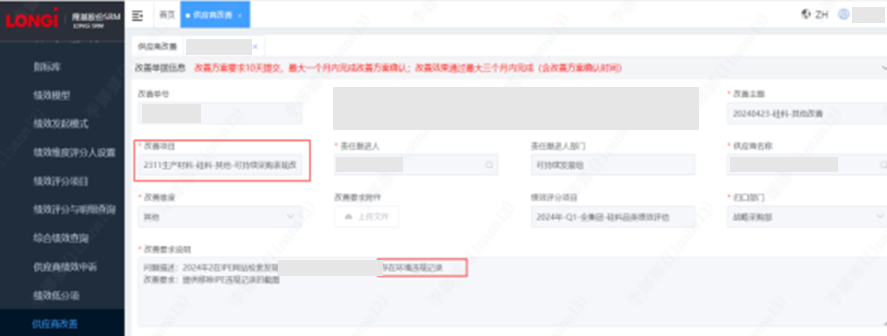
To help suppliers identify their performance in the field of sustainable development and address their shortcomings, LONGi Green Energy has established a "Supplier Improvement" module in its supplier management system. Suppliers can log in to the SRM platform to view their scores and performance in comparison with peers in the same industry, identify existing issues, and promptly formulate their own rectification plans.


19、Investigation on Alternative Mineral Sources
LONGi has formulated the Responsible Mineral Procurement Management Policy to systematically define its primary responsibilities in the field of responsible minerals. We require suppliers whose products contain relevant minerals to sign the LONGi Supplier - Code of Conduct, which includes requirements against the use of conflict minerals. Meanwhile, we conduct annual supply chain due diligence, establish rectification lists for medium- and high-risk suppliers, analyze and mitigate risks based on risk levels, and seek alternative supply sources when necessary to facilitate risk mitigation.
The 2024 due diligence results show that no mineral risks from conflict-affected and high-risk areas were identified in the company's supply chain. To strengthen emergency response capabilities, we continuously expanded the scope of assessment and screening for conflict-free suppliers during the reporting period, aiming to build a more resilient responsible mineral supply system.
20、Conflict-Free Mineral Measures
LONGi stated in the CSR Code of Conduct of LONGi Suppliers that we commit to neither use nor sell any conflict minerals and requires all direct and indirect suppliers to ensure that their supplied products are free from conflict minerals sourced from high-risk regions. By the end of the reporting period, LONGi’s use of conflict minerals is 0, with 0 revenue from products that use conflict minerals, and the signing rate for the CSR Code of Conduct of LONGi Suppliers has reached 100%.
In 2024, LONGi achieved a 100% completion rate for conflict mineral due diligence surveys of suppliers containing 3TG. All six smelters upstream of the 12 suppliers of tin-containing materials across the Group have obtained the RMAP certification and are not involved with conflict-affected and high-risk areas.
Products containing minerals from conflict-affected and high-risk areas account for 0% of total revenue. Products containing minerals from conflict-affected and high-risk areas sourced from suppliers verified as conflict-free account for 100% of total revenue.
21、2024 Data on Sustainable Procurement Targets
LONGi continuously elevates the sustainability standards in its raw material procurement and product manufacturing processes. The company has set two clear goals to be achieved by 2030: increasing the proportion of sustainable raw material procurement to 95%, and raising the share of recycled raw material procurement to 80%.
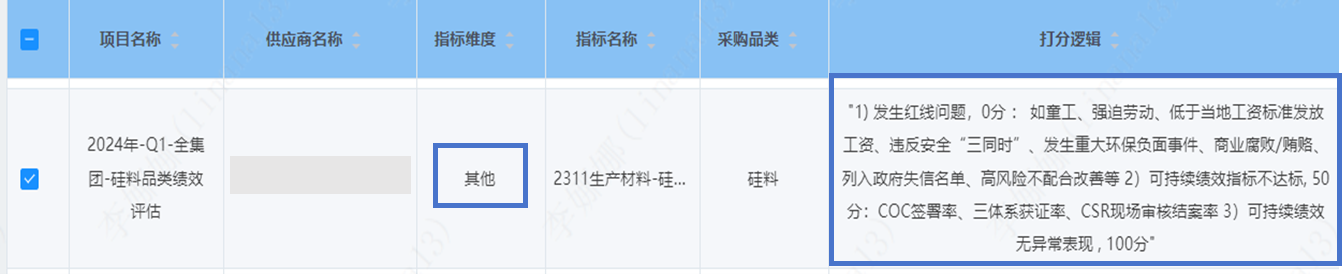
22、KPIs for Supplier Assessment and/or Development


* In 2024, we plan to conduct desktop assessments for at least 40 key suppliers.

* In 2024, we must complete corrective actions for all suppliers identified through assessments as having significant risks, to ensure steady improvement in supply chain delivery and ESG management capabilities.

* In 2024, we plan to launch an eight-month ESG management system training and practical skills development program for at least 10 suppliers. A rigorous review will be conducted at the end of the year to ensure all participating suppliers meet LONGi’s reassessment standards. By the end of 2024, LONGi had completed the reassessment of suppliers involved in the capacity-building program, with all suppliers passing the evaluation, accounting for one-third of all key suppliers.
23、Conflict Minerals

24、2024 Data on Customer Satisfaction Measurement


Since 2024, LONGi has adopted the NPS (Net Promoter Score) method to measure customer satisfaction and word-of-mouth communication potential by evaluating customers' brand loyalty and willingness to recommend through a simple question. This method replaces the previous satisfaction survey standards within LONGi, based on scientific validity and representativeness. Meanwhile, LONGi refers to the NPS calculation method to divide the evaluation results into five levels: Average (below 20%), Good (20% - 30%), Excellent (30% - 50%), Outstanding (50% - 60%), and Superb (above 60%).
Therefore, the customer satisfaction data in 2024 has changed compared with that in 2023 and before. In the future, LONGi will maintain the NPS measurement method to ensure data continuity. According to the survey, the customer satisfaction in 2024 reached 74.9%, far exceeding the previous goal of maintaining "Outstanding" or above.
Furthermore, Longi has converted the historical satisfaction data from 2021 to 2023 into results under the NPS (Net Promoter Score) methodology framework in accordance with its internal satisfaction measurement standards.
25、Product Recalls

Governance & Economic
1、Risk categories identified in human rights due diligence, and the categories of groups involved
LONGi is committed to respecting and protecting human rights, conducting regular human rights due diligence to identify and assess risks including child labor, forced labor, freedom of association and collective bargaining, discrimination, etc. Meanwhile, we pay special attention to potential human rights risks that freelance employees, women, children, indigenous peoples, and local communities may face. Through strengthening due diligence management, we establish and implement human rights due diligence risk procedures to prevent and mitigate human rights risks. The Company also adopts various types of remedial measures, including complaint mechanisms, compensation programs, and continuous improvement plans, to effectively respond to and address occurred human rights violations. In this year, the Company's human rights risk mitigation plan covers all operating locations.
2、Risk Identification Management Process and Board Risk Management Training
LONGi attaches great importance to the cultivation of risk culture and the enhancement of risk governance capabilities. During this year, we have established a normalized board risk management mechanism, systematically incorporating risk issues into the agenda of regular meetings. In the deliberation process, we continue to deepen directors' understanding of the risk management system and further strengthen their main responsibility for risk governance. At the same time, through the regular meeting mechanism, the company carries out special publicity and discussions on key risk areas such as strategy, operations, and climate for all directors, continuously improving the effectiveness of the board's risk supervision and fulfillment of duties, and effectively enhancing the forward-looking and stability of decision-making. In addition, LONGi has incorporated the effectiveness of risk management into the performance appraisal system of business managers at all levels, formulated detailed evaluation indicators, promoted the effective implementation of management responsibilities, and actively built a risk management culture with full participation and full coverage.
Meanwhile, Longi regularly provides directors with training on environmental issues, industry best practices and standards (such as TCFD and SBTi).
3、Oversight of Ethics Issues
The board of directors bears the ultimate responsibility for the compliance of the company's business activities and the management of the company's business conduct, supervising the implementation of employee conduct management; the senior management assumes the implementation responsibility for employee conduct management, executing the resolutions of the board of directors. The Risk Control and Management Department takes the lead in the company's employee conduct management, responsible for the overall coordination, facilitation, and supervision of employee conduct management; each business unit management department assumes the management responsibility for the conduct of employees in its own line, responsible for organizing the implementation of continuous monitoring, identification, recording, processing, reporting, and evaluation of the business ethics risks of employees in the departments under their jurisdiction. It also regularly updates the code of conduct in accordance with external changes and internal needs.
4、IT Security Governance
Information Security Management Organizational Structure
To ensure the management of information security and privacy protection, LONGi has established a global information security and user privacy protection management organization under the Board of Directors. This organization is responsible for decision-making, strategy formulation, and the overall oversight of information security and privacy protection across all systems, regions and processes. To ensure the effective management of these areas, the CEO has been assigned to take charge of monitoring and supervising the implementation of information security and privacy protection measures.
5、Contributions & Other Spending

6、Breaches of the Business Ethics Code in 2024
