

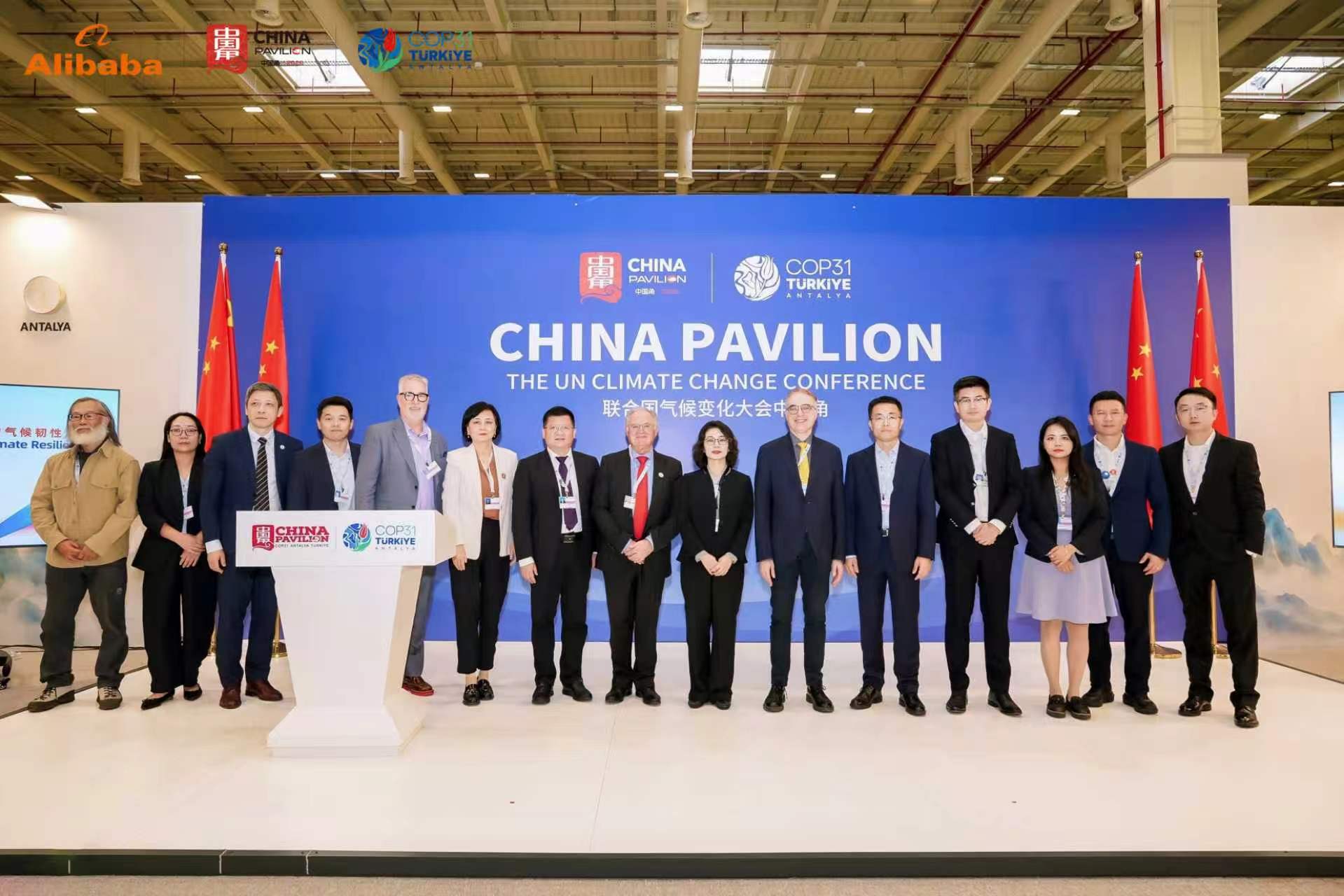
Antalya, Türkiye, 14 November, 2026——On November 14, the side event “Sustainable AI for Climate Resilience”, guided by China’s Ministry of Ecology and Environment and hosted by Alibaba Group, was held at the China Pavilion during COP31. LONGi was invited to attend and delivered a keynote titled “The Global Imperative of Compute-Power Coordination and LONGi’s Solution”. LONGi believes that in the era of explosive growth in computing power, “round-the-clock & carbon-free power matching” has become a baseline requirement. The challenge facing global grids is no longer “how to expand the system” but “how to design the system”—the world does not lack total green power; it lacks the system capability to match green power with computing demand in real time.
Floria Wang, Head of Global Branding at LONGi, attended the side event and shared LONGi’s insights for the AI era: what truly needs to change is no longer “how much electricity we generate,” but whether green power can reliably reach where and when computing power needs it. “Behind this lies a global contradiction: computing power requires certainty, while green power is inherently variable and uncertain. This contradiction knows no borders and no technology route. It is becoming the core energy issue for the next stage of computing infrastructure.” Wang said.
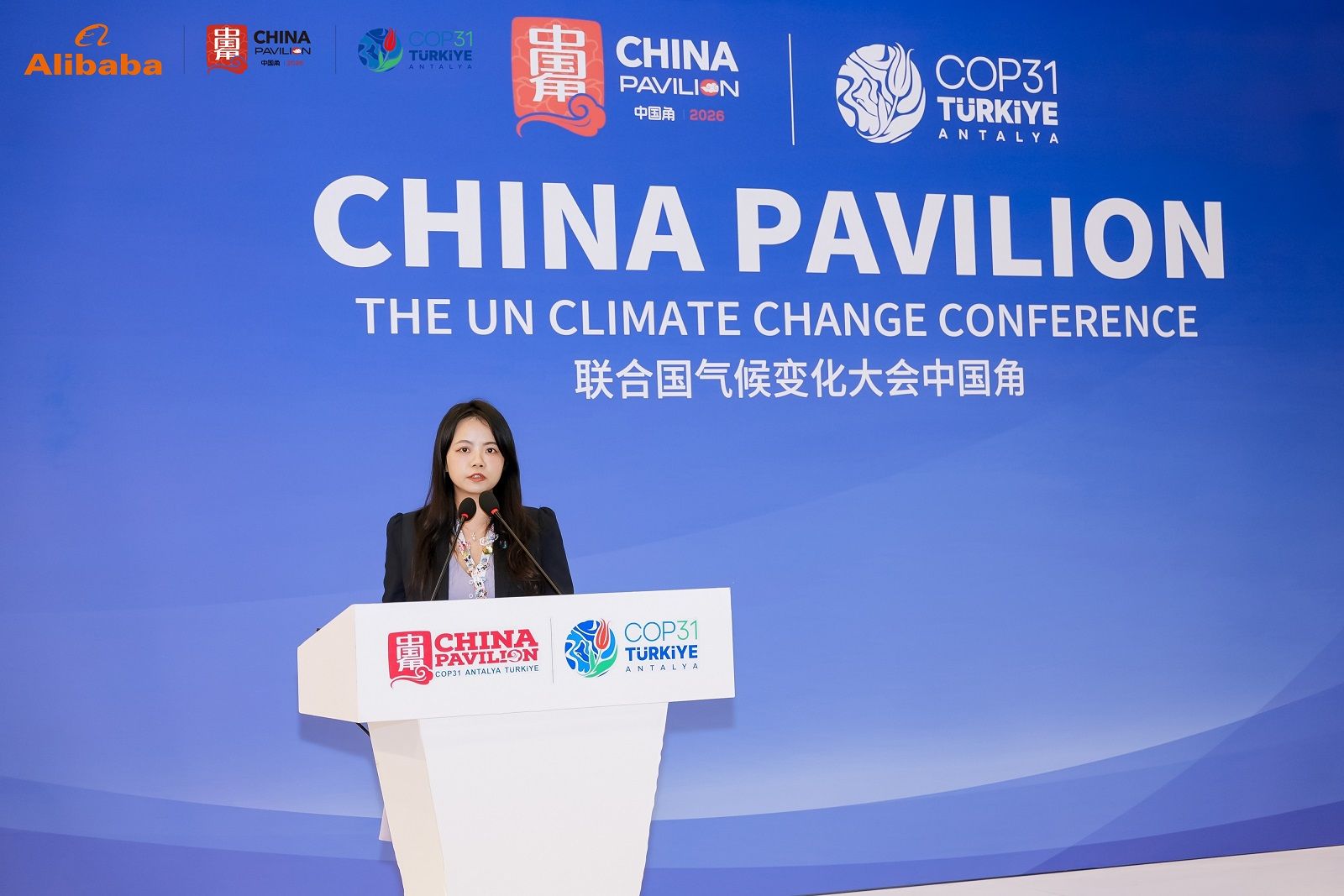
With the development of AI, global demand for computing power and data center electricity is rising rapidly. Data shows that global data center electricity consumption is expected to reach 565 TWh in 2026, up about 26% year on year. At the same time, “round-the-clock & carbon-free power matching” is becoming a new benchmark for global data centers. This means the demand side no longer focuses on how much green power a data center uses, but on whether reliable green power supply is available at every moment computing power needs it.
LONGi believes that the challenge global grids facing is shifting from a “system expansion problem” to a “system design problem.” “The world does not lack total green power; it lacks the system capability to shift green power to the moments when computing power needs it. We cannot passively wait for the grid to improve, nor can we expect to build a new power plant for every AI data center. We need to make green power dispatchable and adjustable locally, in green-power-rich regions.” Wang said.
There are two paths to making green power controllable. One is to wait for grid expansion, but this is costly and slow to deliver results. The other is to reconstruct the relationship between computing and power in green-power-rich regions—which is what LONGi advocates: shifting computing loads to those regions with rich wind and solar resources, generating power and computing locally.
China already has many such cases. With the deepening of the “East Data West Computing” project, China has built giant supercomputing centers in western provinces such as Inner Mongolia and Qinghai, using local abundant renewable energy, especially solar-storage, to meet growing computing power and green power demand.
Solar-storage can indeed alleviate the above structural contradiction to some extent, “But this path has a deeper bottleneck,” Wang said, “equipment can be bought, but system responsibility cannot.”
Today, the reality global solar-storage integration facing is that solar modules, energy storage cabinets, PCS and EMS often come from different suppliers, fragmenting responsibility at every layer. AI data centers have near-zero tolerance for power supply continuity and quality. The result of a “patchwork solar-storage” approach is that “no one is accountable for the final outcome.” This brings not only efficiency losses, but also safety risks, delivery difficulties and blurred accountability, ultimately leading to systemic friction and continuously rising overall costs.
LONGi’s answer is “One System, One Platform, One Responsibility.” In April 2026, LONGi officially launched the LONGi ONE full-stack solar-storage integrated solution: Ultimate BC solar technology × 5S fully self-developed energy storage system, moving from physical assembly to true native integration.
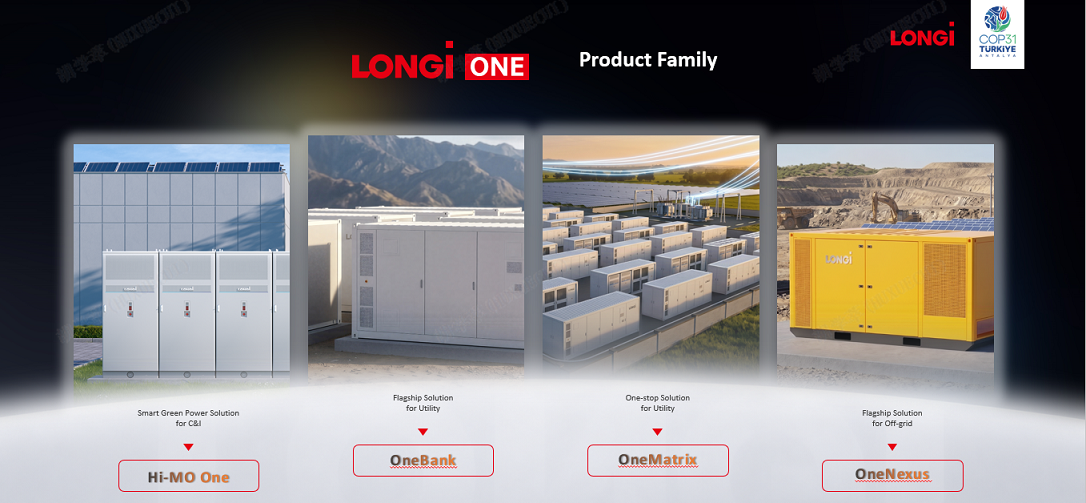
“The three ONEs are not about simply putting equipment together. They redefine the underlying logic of solar-storage systems with fully self-developed full-stack solar-storage products, redefine how green power assets increase in value with an ultra-intelligent collaboration software platform, and redefine the trust boundaries of energy cooperation with integrated O&M services,” Wang said.
As of the third quarter of 2026, the solar-storage integration strategy has advanced rapidly, with cumulative orders exceeding 3 GWh. From the Strathalbyn Lunio project in South Australia to Finland, Italy, Germany and Africa, and to the Shanxi heavy-duty truck energy storage project, LONGi ONE has been validated globally.
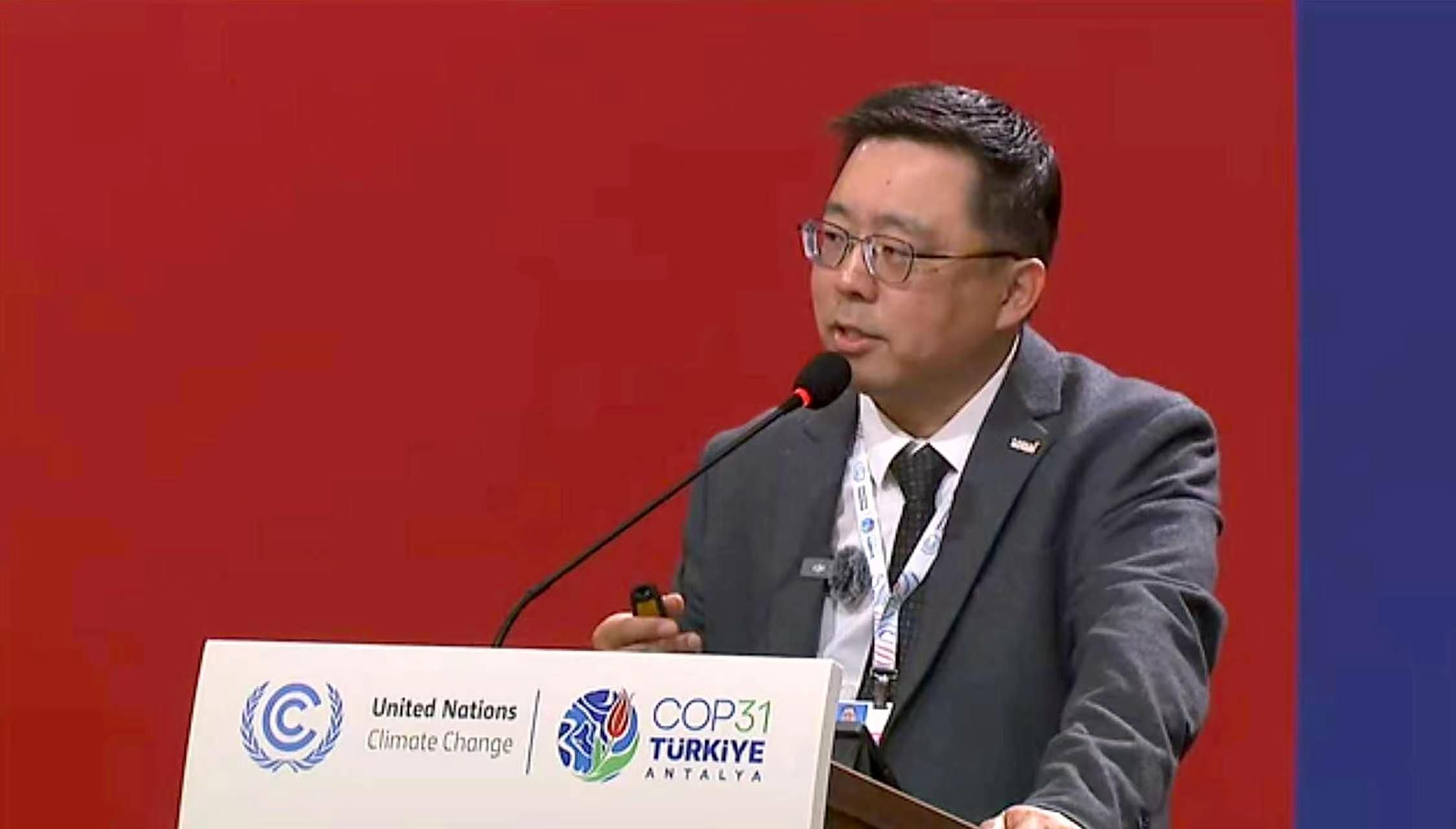
On the same day, a launch event titled “AI Infrastructure: From Power Consumer to Energy Collaboration Partner”, jointly organized by GeSI and LONGi, was held at the UN Press Room. Leon Zhang, Overseas Managing Director of LONGi, attended and delivered a keynote titled “LONGi, Powering the Next Era of Clean Energy Integration”, highlighting typical global cases of LONGi’s solar-storage integration supporting compute-power coordination.
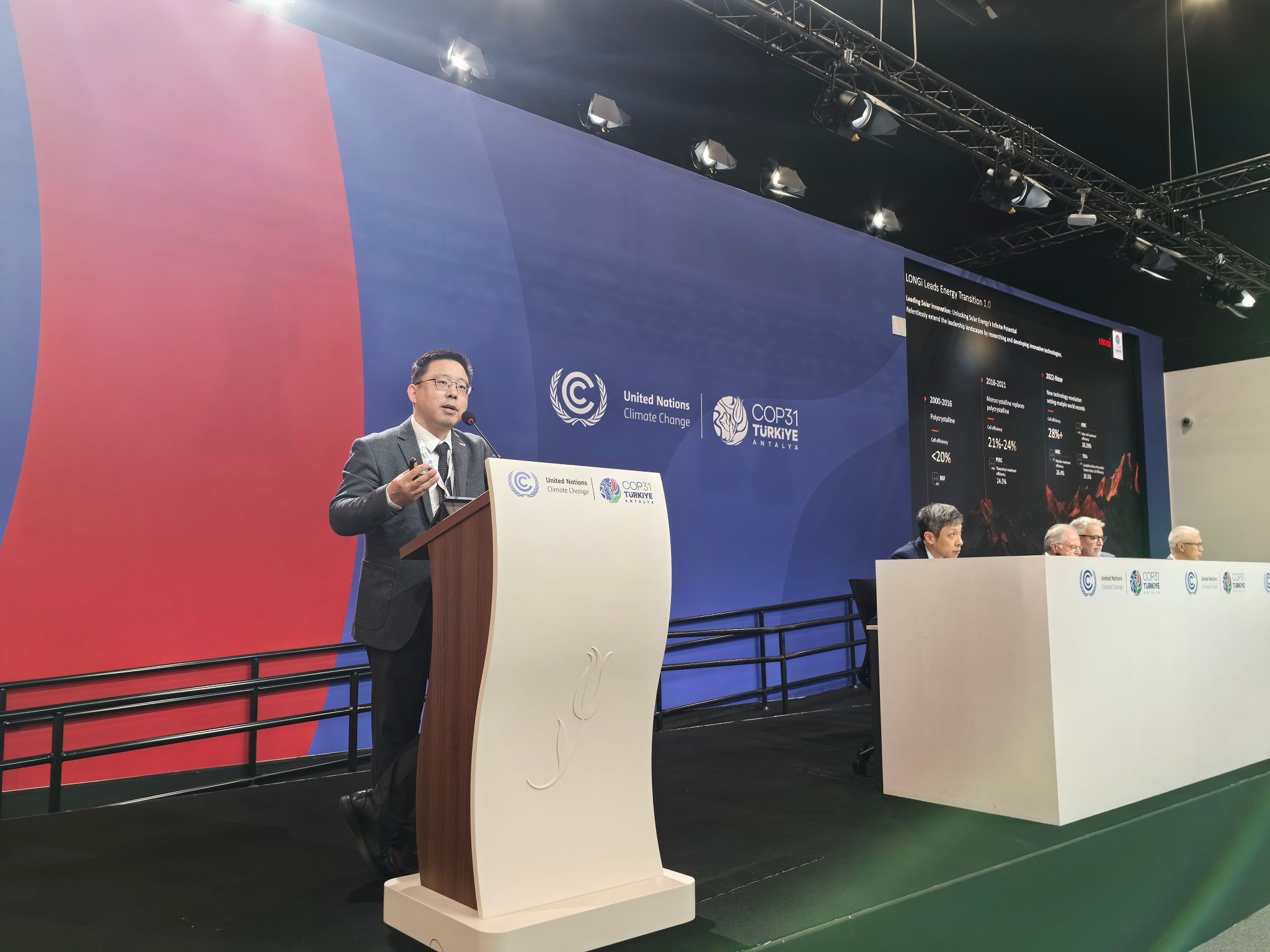
LONGi believes that true compute-power coordination needs to balance the spatial layer (where to compute), the temporal layer (when to use power), and the mechanism layer (how computing power participates in power system regulation). Through intelligent scheduling and coordinated control, computing facilities can transform from purely rigid loads into flexible resources that can follow green power fluctuations and participate in system regulation, rather than leaving the grid to passively backstop.
Leon Zhang introduced that in addition to the three ONEs, LONGi has added LONGi ONE OS since 2026. This AI-driven software system provides intelligent energy scheduling for AI data center (AIDC) applications. “The core principle of this system’s design is safety. It includes source-level control over the selection and design of cells and battery packs, paired with active balancing technology for real-time monitoring and proactive warnings. In this sense, it truly uses AI to empower AI.” Zhang said.
Safety is the lifeline of LONGi’s energy storage business. From solar to energy storage, in addition to technological innovation, LONGi has always anchored to the value of safety—safety incidents are either zero or 100%;——even if the probability of an incident is only 0.1%, the loss to customers is 100%. To date, LONGi has deployed more than 13 GWh of energy storage systems globally. Backed by automotive-grade safety, it has had zero thermal runaway incidents to date.

As the business grows, LONGi is increasing investment in energy storage. With the Suzhou Intelligent Manufacturing Base in operation, LONGi’s energy storage capacity has reached 31 GWh; by 2028, capacity will exceed 100 GWh. In addition, LONGi plans to build 30 Excellence Service Centers globally before 2028 to address customer needs locally, including project planning, solution design, commissioning and delivery, later O&M, after-sales service and skills training.
About LONGi
LONGi Green Energy Technology Co., Ltd. was founded in 2000 and is committed to becoming a world-leading solar and storage technology company. Under the mission of "To make the best of solar energy to build a green world" with a brand positioning of "The most trusted, reliable solar company that blazes the trail for green technology," we deliver holistic, zero-emission new energy solutions spanning the generation, storage, and application of green energy. Driven by continuous innovation, we aim to make green energy more affordable, safer, and more accessible — truly benefiting everyone.
More details here: www.longi.com/